
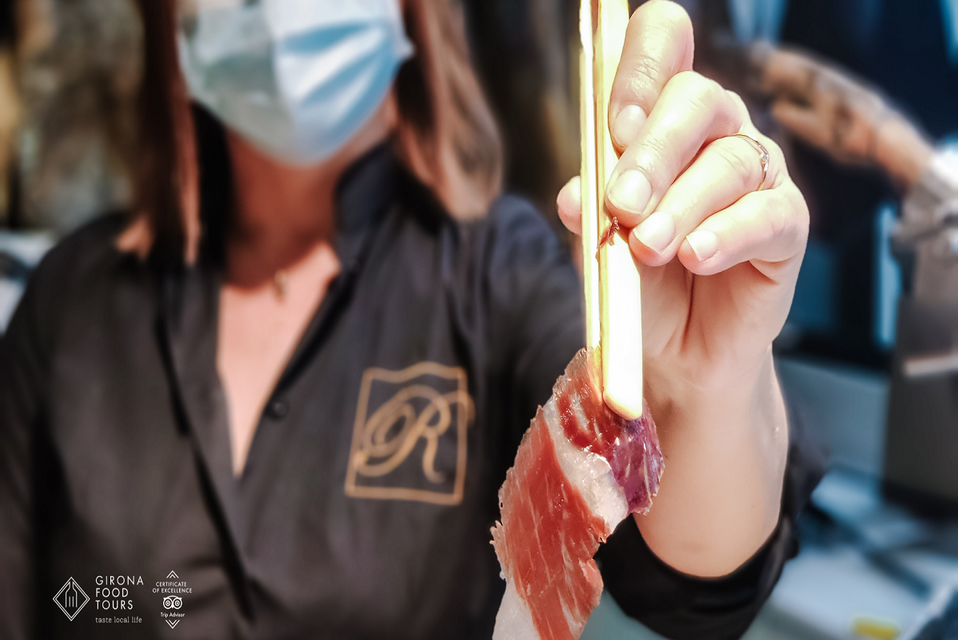
The Story behind Iberian Hams

The Story behind Iberian Hams

The Story behind Iberian Hams

Intimately linked to Spanish gastronomy and culture, present in many of our homes, hams are part of the identity of Spain.

If we think of restaurants, bars, that call themselves "Spanish" we will find the traditional hams on their menu.

There are theories that state that it was the Phoenicians, a merchant people, who introduced the pig through settlements such as Gadir (Cádiz) or Malaka (Málaga).

Among the hams of the peninsula, the productions of Tarraco (Tarragona) had special prestige, where a fossilized ham was found some 2,000 years old.

Ham was undoubtedly one of the most appreciated and marketed products from the peninsula to all of Rome. The importance of this trade was such that, during the time of the emperors Augustus and Marco Vipsanio Agrippa, coins in the shape of ham were minted.

Ham or "Jamón" is undoubtedly one of the emblems of the so-called “Marca España”.

Do not miss the opportunity to taste the delicious hams, standard in all of our tours.

We are sure that it will be an unforgettable experience for you!

+34 972 664 649
WhatsApp
info@gironafoodtours.com
This website uses its own and third-party cookies to improve the browsing experience as well as for analysis tasks.

What are cookies?

A cookie is a small file stored on the user's computer that allows us to recognize it. The set of cookies help us improve the quality of our website, allowing us to monitor which pages are useful to the website users or and which are not.

Acceptance of the use of cookies.

Necessary technical cookies

Always active

Technical cookies are absolutely essential for the website to work properly. This category only includes cookies that guarantee the basic functions and security functions of the website. These cookies do not store any personal information.

Analytic cookies

All cookies that may not be particularly necessary for the website to function and are used specifically to collect personal data from the user through analysis, ads and other embedded content are called unnecessary cookies. You must obtain the user's consent before running these cookies on your website.